Visual Artist and Storyteller
“When art carries a message, it has the power to shape perceptions”
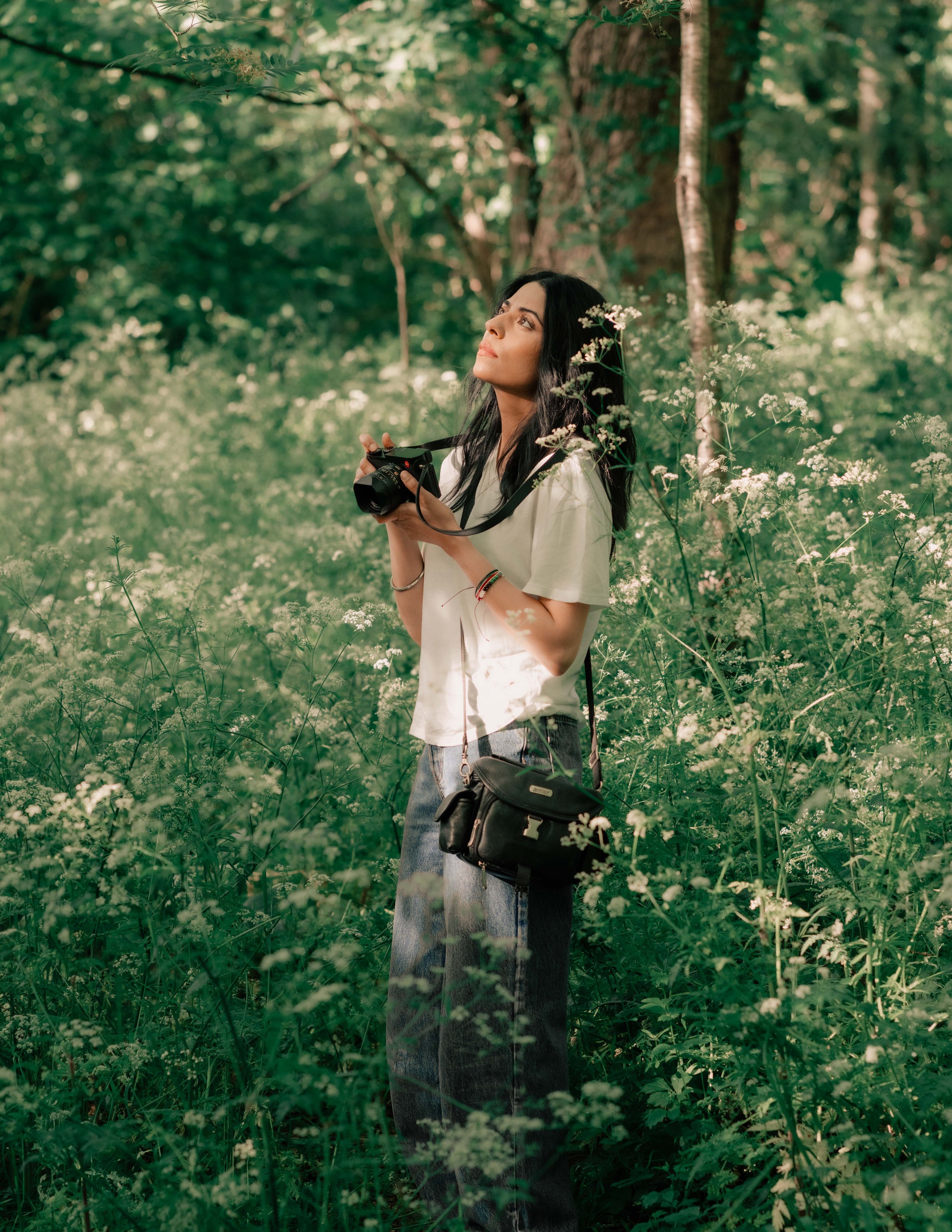
Sonia Bhamra is an award-winning, multidisciplinary artist and storyteller based in Birmingham, UK. Known for her narrative-driven approach to lens-based media, she holds a BA (Hons) in Fine Art and describes her creative process as “painting with photography”. Her practice sits at the intersection of visual arts, community engagement, and environmental consciousness. Her creative practice directly drives her current Master’s degree in Arts & Education Practices, creating a reciprocal feedback loop where academic theory and real-world making constantly inform one another. It was for this innovative, practice-led research that she was awarded the prestigious Gertrude Bowater Scholarship.
Under her ongoing project, Illusions of Maya—an Arts Council England–funded body of research rooted in her Sikh heritage—Bhamra explores climate consciousness through an intersectional lens. Rather than leading with data, she applies a philosophical approach to climate conversations, asking: how can we shift perception to recognise our interdependence with the living world? Within this framework sits her photographic series, The Illusion of Separation. This body of work includes Dressed in Excess, recognised by the British Journal of Photography’s Decade of Change Award, and Save Our Forests, selected for the international Earth Photo exhibition. Alongside these sits The Nature of Our Minds, an ongoing investigation into urban green spaces as portals to the subconscious.
Translating this research into practice, Bhamra has led nature-disconnection investigations with the Ikon Youth Programme at Ikon Gallery. She has also developed co-creative social practices, including Maya in Practice with Spectra and the Brushstrokes Community Project, alongside leading numerous community workshops across Birmingham.